Novel Relics
Nine George V & George VI Silver Florins 1920–1937 | Including Scarce 1931 | British Two Shilling Coins | .500 Silver
Nine George V & George VI Silver Florins 1920–1937 | Including Scarce 1931 | British Two Shilling Coins | .500 Silver
Or spread the cost with Klarna — pay in 3 interest-free instalments of £23.33.
No hidden fees when you pay on time.
Available at checkout — subject to status. Learn more
Couldn't load pickup availability
Nine two-bob bits, and one of them is scarce.
The florin is a slightly eccentric coin with a slightly eccentric history. It was introduced in 1849 as Britain's cautious first step towards decimal currency — one tenth of a pound, no more and no less, a toe dipped in continental waters by a country that then thought better of the whole business for another hundred and twenty years. It never quite lost that air of being an experiment nobody followed up on. Everyone called it two shillings anyway.
This is a run of nine of them, spanning 1920 to 1937.
The dates. Two 1920s, two 1922s, two 1929s, a 1930, the scarce 1931, and a 1937 George VI to close.
Why 1920 matters. That was the year Britain gave up on sterling silver. The First World War had wrecked the currency and sent silver prices through the roof, so the Royal Mint quietly halved the silver content of the coinage from .925 to .500. Every florin here is that debased .500 alloy — the coinage of a country that had just spent everything it had. The 1920s in this lot were struck in the changeover year itself.
Why 1931 matters. It's the scarce one, and it's the reason to buy this lot. Fewer were struck than in the surrounding years, and it happens to fall in the year Britain abandoned the gold standard altogether. A coin from the bottom of the slump.
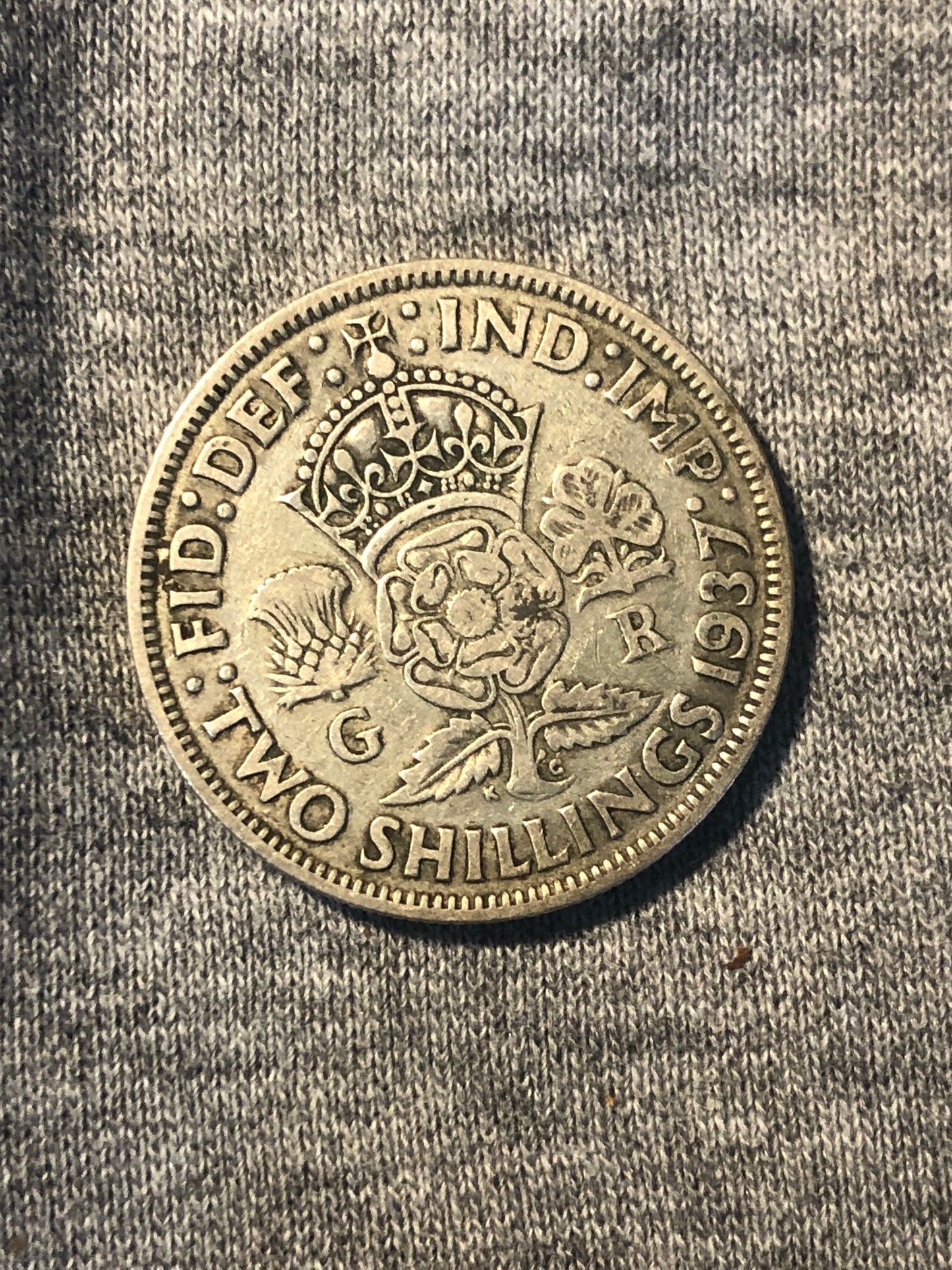
And why 1937 matters. George VI's first year on the coinage — the year after his brother abdicated and left him with a job he never wanted and a currency that needed a new head on it in a hurry. Father and son, either side of a constitutional crisis, on the same denomination.
Together they carry roughly 51 grams of silver, and about seventeen years of a country going through it.
Where they came from. Honestly? A mix. Some of these came out of a personal collection built up over years, and some came out of the ground with a detector. At this distance we genuinely cannot tell you which is which, and we would rather say so than invent a tidy story. What we can tell you is that they are all what they claim to be.
Condition. Circulated, as coins that spent decades in pockets and tills always are. Honest wear across the lot, all dates clear and legible, the designs sound. Original toning throughout — we have not cleaned them and we would ask you not to either. A cleaned silver coin loses its toning and a good deal of its value along with it.
Sold as a lot of nine. Not split.
One of a kind — when it's gone, it's gone.
Free UK delivery.
Share